Five Decisions That Landed on May 15
Five May 15 moments — from the TSE to Amazon's IPO — and what they still teach.
Five decisions landed on May 15 across 123 years of business history. Each one was contested, misread, or dismissed at the time. Each one turned out to matter.
May 15, 1878 — Japan licenses a stock exchange
Finance Minister Ōkuma Shigenobu granted the founding license on May 15, 1878 to industrialist Shibusawa Eiichi and Younosuke Mitsui of the Mitsui conglomerate. 1 Japan had just dismantled its feudal system; former samurai had been compensated with government bonds and those bonds needed a market. The Tokyo Stock Exchange opened June 1 and spent its first four decades trading bonds, not equities — corporate shares only became dominant by the 1920s as industrialization accelerated. 2
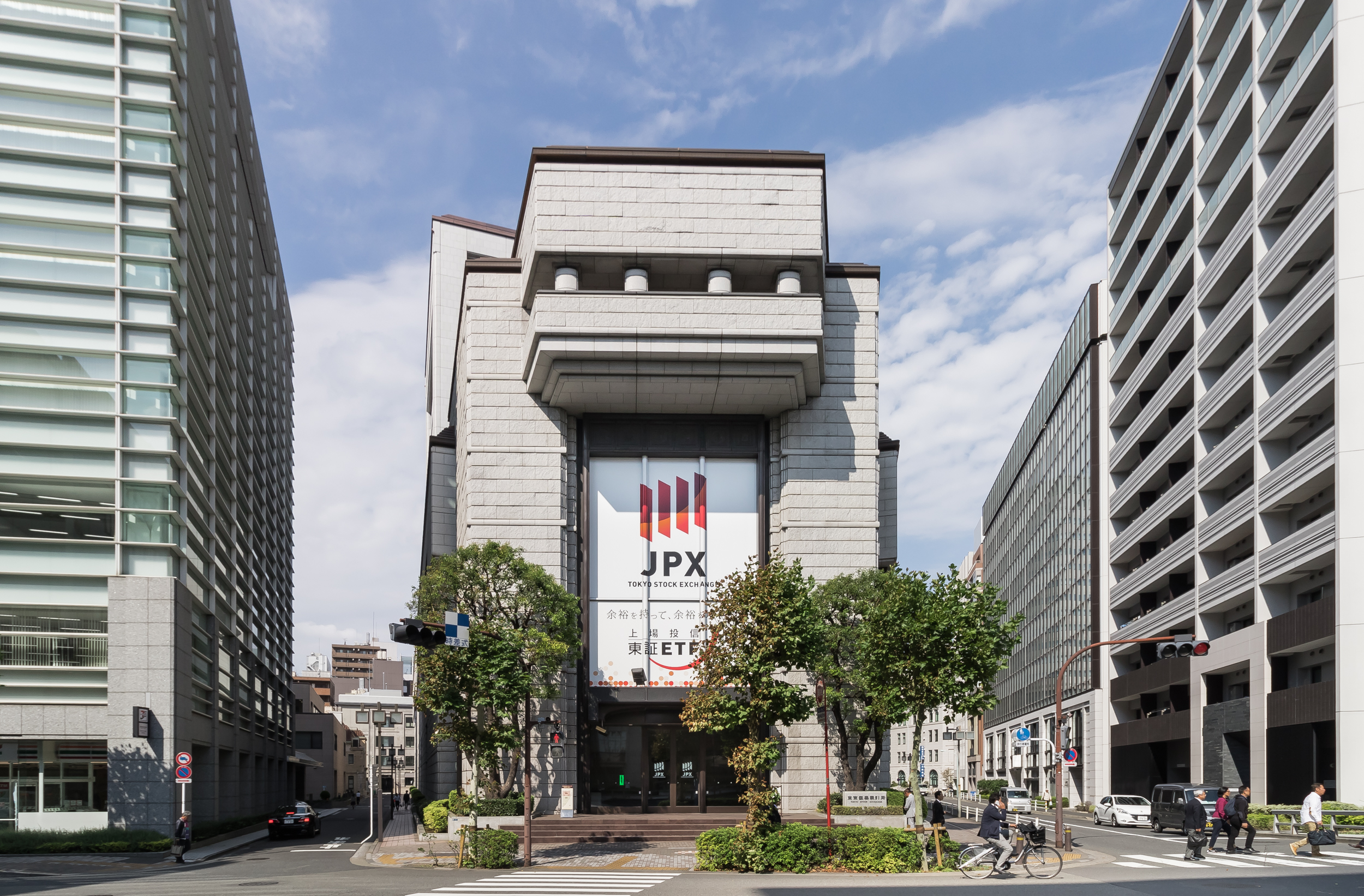
The exchange was forcibly dissolved into a wartime body in 1943, shut down entirely in August 1945, and didn't reopen until May 16, 1949. 3 The Nikkei 225 index peaked at a closing high of 38,915.87 on December 29, 1989, then lost 63% of its value over the next three years. 4 The index didn't permanently reclaim that peak until February 22, 2024, when it closed at 39,098.68 — 34 years and 2 months later. 5
Mirror: Infrastructure decisions made under political pressure in an economy that barely exists yet can shape markets across generations. The question isn't whether the institution will face a crisis — it will — but whether the underlying design holds.
May 15, 1911 — Standard Oil is broken up. Rockefeller gets richer.
The U.S. Supreme Court ruled 8-1 in Standard Oil Co. of New Jersey v. United States (221 U.S. 1) that Standard Oil had unlawfully monopolized the petroleum industry and ordered its dissolution into roughly 34 independent companies. 6 Standard had controlled around 90% of U.S. refining capacity at its peak. 7
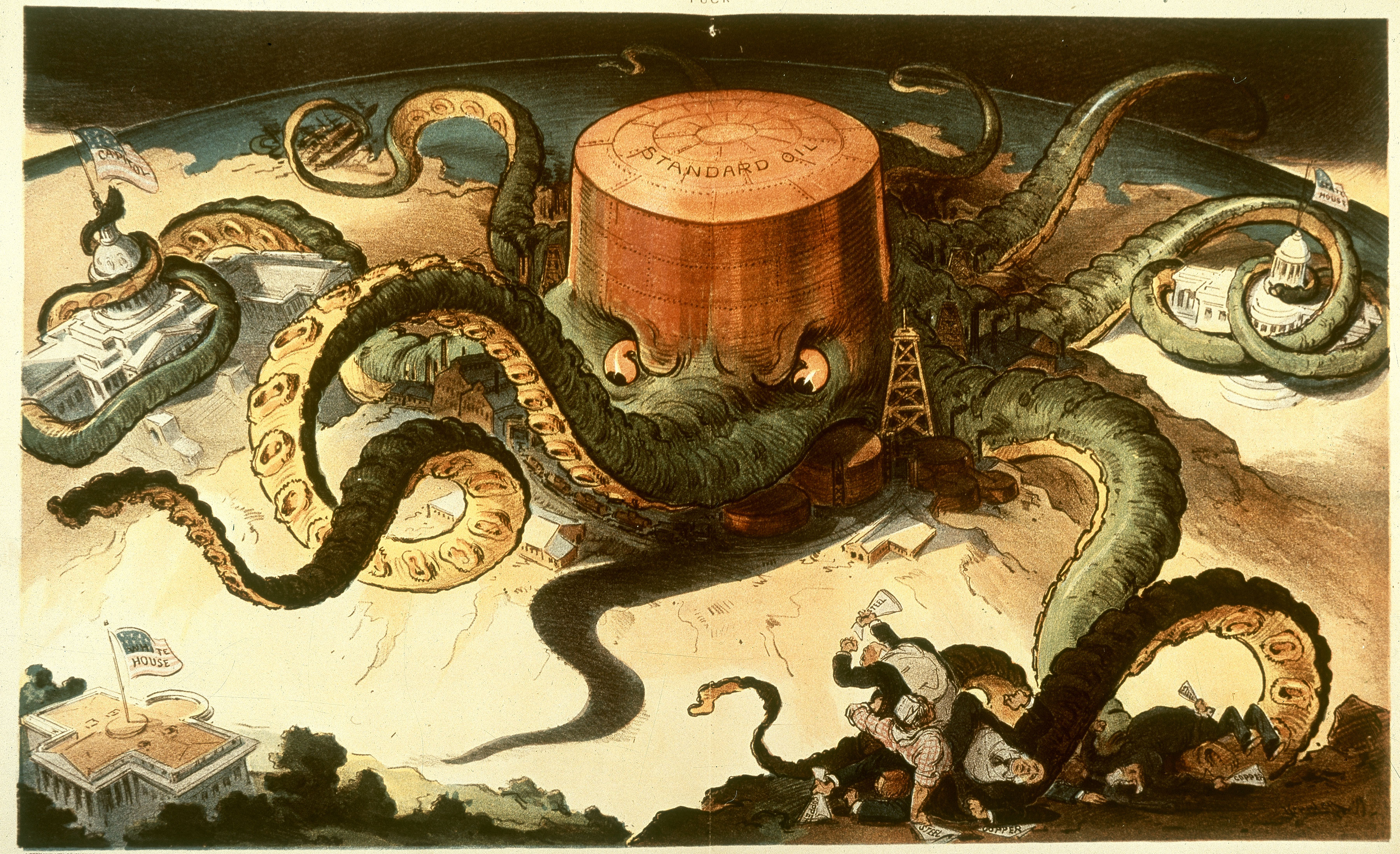
The outcome was the opposite of what most expected. John D. Rockefeller's personal wealth climbed from roughly $300 million in May 1911 to more than $900 million by the end of 1913. 7 Standard had been privately held and published no annual reports; public trading exposed what the assets were actually worth. Simultaneously, the automobile age arrived — Ford's Model T was multiplying on American roads, and gasoline demand was surging. Former President Theodore Roosevelt's response: "No wonder that Wall Street's prayer now is: 'Oh Merciful Providence, give us another dissolution.'" 7
The 34 successors eventually reconsolidated: Standard Oil of New Jersey became Exxon; Standard Oil of New York became Mobil; they merged in 1999 as ExxonMobil. Standard Oil of California became Chevron. 8
Mirror: Forced divestitures can surface value that concentration was hiding. Before fighting a breakup or spinoff, ask what your assets would trade at if they were independent.
May 15, 1940 — A carhop drive-in opens in San Bernardino
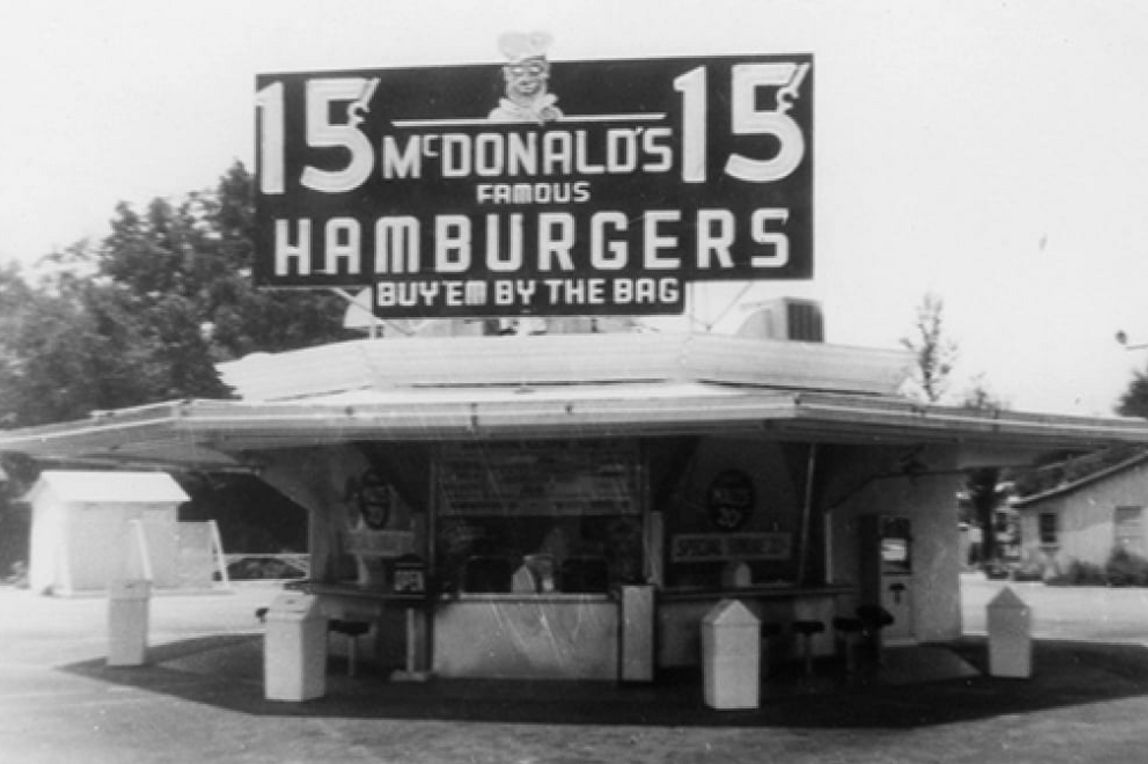
Richard and Maurice McDonald opened McDonald's Bar-B-Que at 1398 North E Street in San Bernardino, California, just off Route 66. 9 The restaurant had about 25 menu items, female carhops, and a barbecue pit using hickory chips imported from Arkansas. Annual sales soon topped $200,000. 10
The brothers looked at their sales data. Eighty percent came from hamburgers. As Dick McDonald said: "The more we hammered away at the barbecue business, the more hamburgers we sold." 10
In 1948, they closed for three months, fired the carhops, cut the menu to 9 items, and built what they called the Speedee Service System — an assembly-line crew where each person specialized in one task, anchored by a 15-cent hamburger. Dick McDonald's operating principle: "You make a point of offering a choice and you're dead. The speed's gone." 10 Ray Kroc — then a 52-year-old milkshake mixer salesman — visited in 1954, saw what the system could scale, and bought out the brothers in 1961 for $2.7 million. 11
Mirror: The product you built your business around may not be what customers want. The data said hamburgers from the start. Acting on that signal cost three months of revenue and the goodwill of the existing staff — but not acting would have cost more.
May 15, 1997 — Amazon prices its IPO at $18
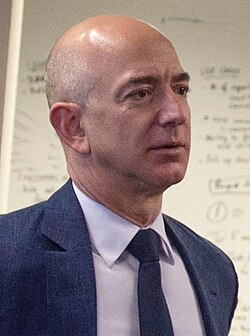
Amazon.com priced 3 million shares at $18, raising $54 million, and listed on the Nasdaq under AMZN. 12 Shares closed at $23.50 on the first day — then fell below the IPO price within a week, hitting $17.125 on May 22. 13 Barnes & Noble, whose 1996 book sales of approximately $2 billion dwarfed Amazon's $15.7 million, sued three days before the IPO over the tagline "Earth's Biggest Bookstore." 14 Bezos's response to questions about the lack of profitability: "We are not profitable. We could be. It would be the easiest thing in the world to be profitable. It would also be the dumbest." 15
A $1,000 investment at the $18 IPO price would be worth more than $2 million today.
Mirror: First-week price action is not a signal about long-term value. The market punished Amazon immediately for prioritizing market share over profit. Bezos treated that tension as a feature, not a problem. The argument is 28 years old and still unresolved in most boardrooms.
May 15, 2001 — Jobs announces Apple will open retail stores. Experts say it won't work.
Apple held a press event at Tysons Corner Center in Virginia to announce 25 stores planned for 2001, each roughly 6,000 square feet in high-traffic shopping malls. 16 Apple had approximately 3% U.S. PC market share. Gateway's Country Store chain — the closest comparable — was drawing about 250 visitors per week per location.
Six days later, Bloomberg BusinessWeek published its verdict. Analyst David A. Goldstein, president of Channel Marketing Corp: "I give them two years before they're turning out the lights on a very painful and expensive mistake." 17 Former Apple CFO Joseph Graziano: "Apple's problem is it still believes the way to grow is serving caviar in a world that seems pretty content with cheese and crackers." 18
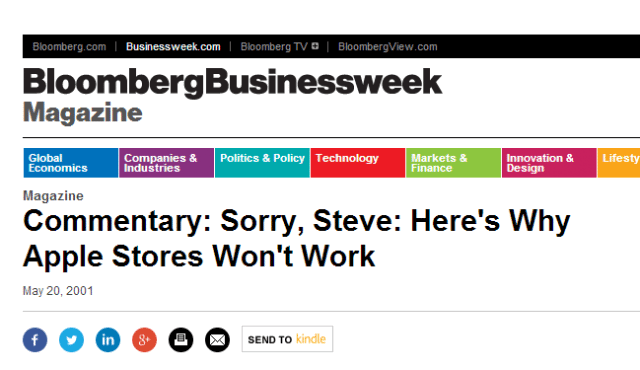
The first two stores opened May 19. In two days, they drew more than 7,700 visitors and recorded $599,000 in sales. 16 Apple Retail became the fastest chain to reach $1 billion in annual revenue — in its third operating year, 2004. 19 By 2012, Apple Store locations averaged $6,050 per square foot in annual sales, more than double Tiffany & Co.'s $3,017. 20 Gateway closed all 188 of its Country Stores in April 2004. 19
Mirror: The experts cited Apple's 3% market share as proof the strategy wouldn't work. They analyzed the wrong product. Apple wasn't distributing computers — it was distributing a reason to switch. When your distribution critics invoke your market share, check whether they've correctly identified what you're actually distributing.
Cover image: Udo Keppler's 1904 Puck cartoon depicting Standard Oil as an octopus. Public domain, via Wikimedia Commons.
References
- 1JPX: History of the Kabuto-cho district
- 2Britannica Money: Tokyo Stock Exchange
- 3JPX: History (TSE)
- 4Wikipedia: Japanese asset price bubble
- 5BBC News: Nikkei closes above 1989 record
- 6Wikipedia: Standard Oil Co. of New Jersey v. United States
- 7Cato Institute: Reappraising Standard Oil
- 8Wikipedia: Successors of Standard Oil
- 9Wikipedia: Richard and Maurice McDonald
- 10Samoa Global News: Richard and Maurice McDonald open the 1st McDonald's
- 11Wikipedia: Ray Kroc
- 12Amazon Press Release: Amazon.com Announces IPO
- 13The Spokesman-Review: Amazon.com Shares Fall Below IPO Price
- 14CNBC: Amazon's Bezos was obsessed with details during IPO
- 15HistoryLink: Amazon: The Early Years
- 16Apple Newsroom: Apple to Open 25 Retail Stores in 2001
- 17CBS News: Vindication for Apple's Retail Vision
- 18Daring Fireball: A Big Misunderstanding
- 19Macworld: Financial history of the Apple Retail Store
- 20AppleInsider: Apple doubles Tiffany's in retail sales per square foot
Add more perspectives or context around this content.