Saint Louis's Prayer Book Hid in a Baltimore Pastor's Collection for Decades
A 13th-century illuminated breviary linked to the court of King Louis IX — written in blue and gold ink in 1260s Paris — was digitized by the Library of Congress on April 30, 2026, opening 563 royal folios to the world for free.
In the middle of the thirteenth century, somewhere in Paris, a team of professional scribes and painters produced a book of prayers. They wrote every word in blue and gold. They decorated fifteen large initials with curling vines, rustling leaves, and small coiled dragons. They probably knew it was destined for a royal household. What they could not have anticipated is that, roughly 760 years later, anyone with an internet connection could page through their work — and that the book's royal identity would remain a mystery for more than six decades after it crossed the Atlantic to America.
On April 30, 2026, the Library of Congress (LOC) Rare Book and Special Collections Division made Ms. 75 — a medieval breviary produced in Paris in the 1260s — freely available online for the first time. 1
What is a breviary?
A breviary is a liturgical book designed for daily use by clergy and members of royal households. It contains the prayers, psalms, hymns, and scriptural readings for the Divine Office — the cycle of devotional services said eight times a day, from Matins before dawn to Compline at night. Owning one in the thirteenth century meant you prayed from it every single day; the more luxurious the production, the more explicitly it announced the owner's status.
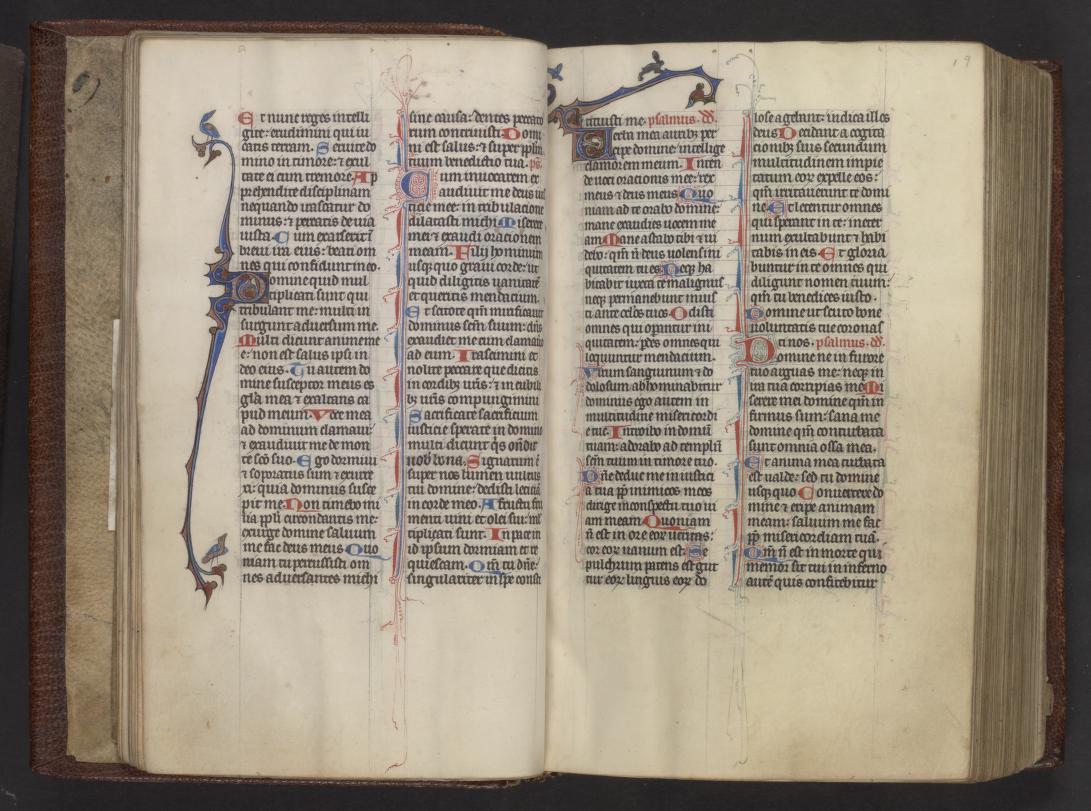
Ms. 75 runs to 563 folios of fine French parchment, written entirely in blue and gold ink 1 — a level of opulence that only a handful of surviving manuscripts share.
Four pages of calendar — and a 700-year-old secret
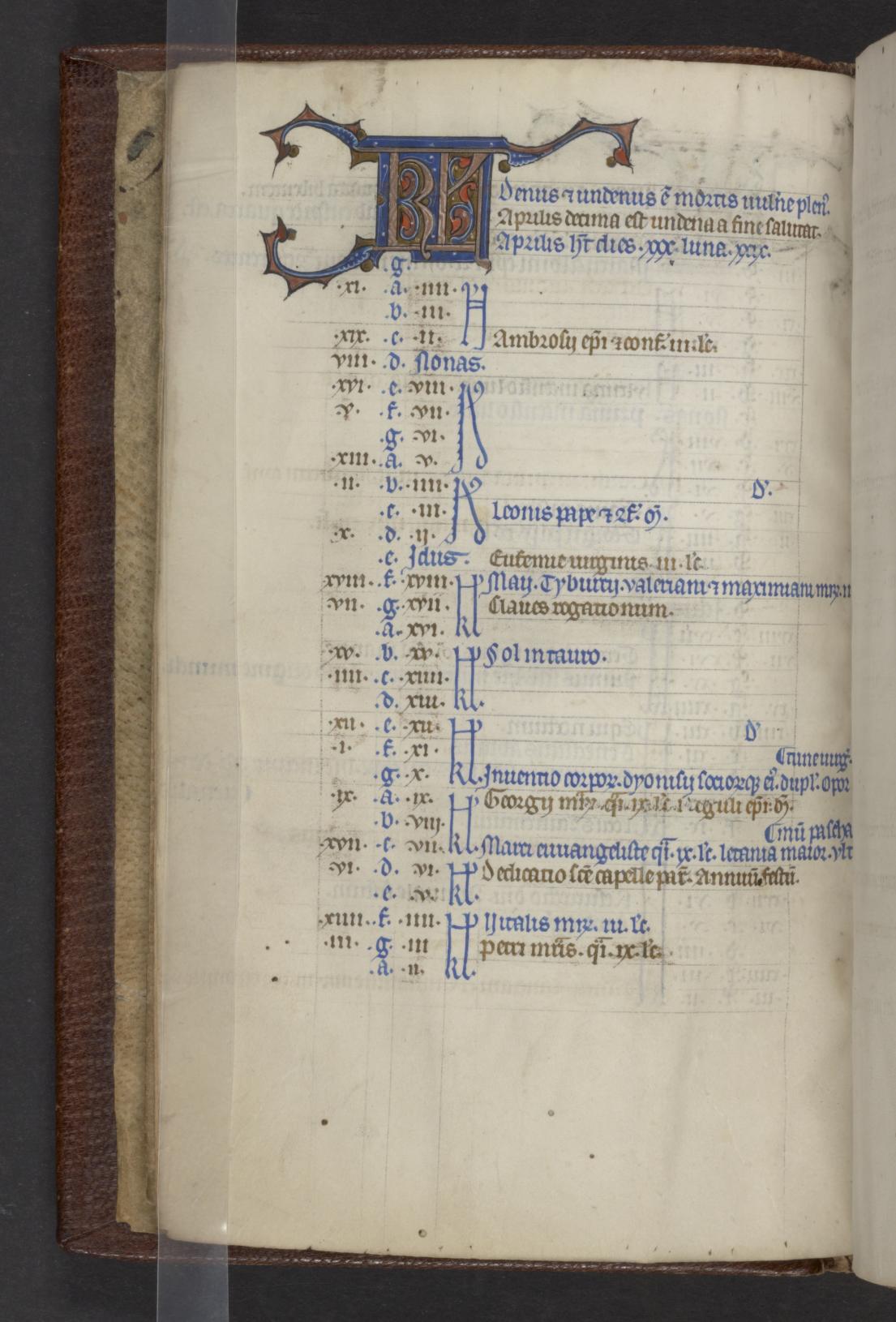
When manuscript scholar Rebecca A. Baltzer examined Ms. 75 in 1979, she found the clues encoded in its calendar. 1
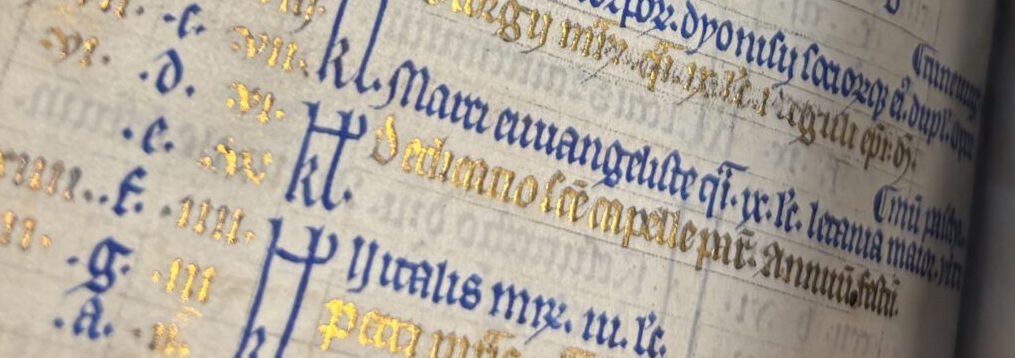
Medieval liturgical calendars list saints' feast days in a hierarchy of ink colors — the more gold, the more important the day. Three gold entries in Ms. 75 do not appear in an ordinary Parisian breviary:
- April 26: the Dedication of the Sainte-Chapelle, the royal chapel Louis IX built in Paris to house Christ's Crown of Thorns
- An obituary entry for Robert, Count of Artois — Louis IX's younger brother, who died at the Battle of Mansoura in 1250
- Saint Genevieve, patron saint of Paris, marked in gold rather than a lesser ink
Together, these three entries point unmistakably toward the court of King Louis IX of France (reigned 1226–1270), the monarch later canonized as Saint Louis in 1297. No private household outside the royal family had any particular reason to single out the Sainte-Chapelle dedication — the chapel was built to be the crown's private relic-shrine, not a parish church.
But Baltzer's most striking finding was a spelling error — and errors are sometimes more revealing than clean text. The word "attrebatensis" (referring to the diocese of Arras) was misspelled as "attrenbatensis" — the same identical mistake appearing in both the Saint Louis Psalter, now held at the Bibliothèque nationale de France (France's national library in Paris), and the Psalter-Hours of Isabelle of France, held at the Fitzwilliam Museum in Cambridge. 1 Three manuscripts, one scribal slip: they came from the same workshop.
The Parisian royal workshop
In the 1260s, Parisian book workshops were producing some of the finest illuminated manuscripts of the entire medieval period — detailed, jewel-colored pages made with gold leaf and imported pigments. The same large atelier responsible for Ms. 75 also made the Saint Louis Psalter — believed to have been made for Louis IX himself — and the Psalter-Hours of Isabelle of France, created for Louis's sister Isabelle, foundress of the Franciscan convent at Longchamp. 1
The shared scribal error, the shared blue-and-gold palette, and the shared calendar conventions all confirm that Ms. 75 belongs to this constellation of royal Capetian devotional manuscripts — a group from France’s ruling Capetian dynasty (987–1328) that scholars have studied closely for over a century. What makes the LOC’s digitization significant is that it brings a third member of the group into the open digital record, available side-by-side with the BnF and Fitzwilliam volumes for comparison.
What the pages look like
Ms. 75 is worth examining page by page.
The blue and gold ink is not decorative whimsy: it was one of the most expensive color choices available in medieval Paris. Lapis lazuli (for the blue) was sourced from Afghanistan; the gold was applied as leaf or powder. Scribes trained for years before being trusted to rule the parchment and space the script correctly for this kind of two-tone writing.
Ms. 75 carries fifteen large illuminated initials, each filled with intertwined vines, leaf sprays, and small dragons 1 — the kind of marginal creature medieval illuminators placed not as theological symbols but as playful decoration, the visual equivalent of a doodle in the margin of a notebook, except executed with gold leaf.
The manuscript is incomplete: four leaves from the psalter section are missing, and the calendar ends after April — the last eight months were lost at some point in the book's long history. 1 What survives is still substantial: 563 folios of fine parchment.
From Baltimore to Washington
The LOC acquired Ms. 75 in 1916 from Reverend Edwin A. Dalrymple, D.D., of Baltimore, Maryland. 1 Exactly how the manuscript made its way from a medieval Parisian atelier to a Baltimore minister's collection is not documented in available records; prior owners between the 1260s and 1916 are unknown.
It sat in the LOC's rare book vaults without any recognized royal connection until Baltzer's 1979 study. Her findings were published and expanded in 1988 and 2000, establishing the 1260s date and the link to the royal Capetian workshop. 1 As LOC blogger Marianna Stell wrote at the April 30 announcement:
"Now that Ms. 75 has been digitized, scholars, educators, and medieval history enthusiasts can enjoy the Library's royal manuscript and marvel at what four pages of a breviary calendar can communicate about the manuscript's use and context more than seven hundred years later." 1
Explore it yourself
The fully digitized Ms. 75 is free to browse in the LOC's digital collections:
For context and commentary, the LOC Bibliomania blog post from April 30, 2026 walks through the calendar evidence in detail: 1
April Brings A Royal French Breviary — Library of Congress, Bibliomania Blog
Cover image: image from April Brings A Royal French Breviary — LOC Bibliomania Blog
Add more perspectives or context around this content.